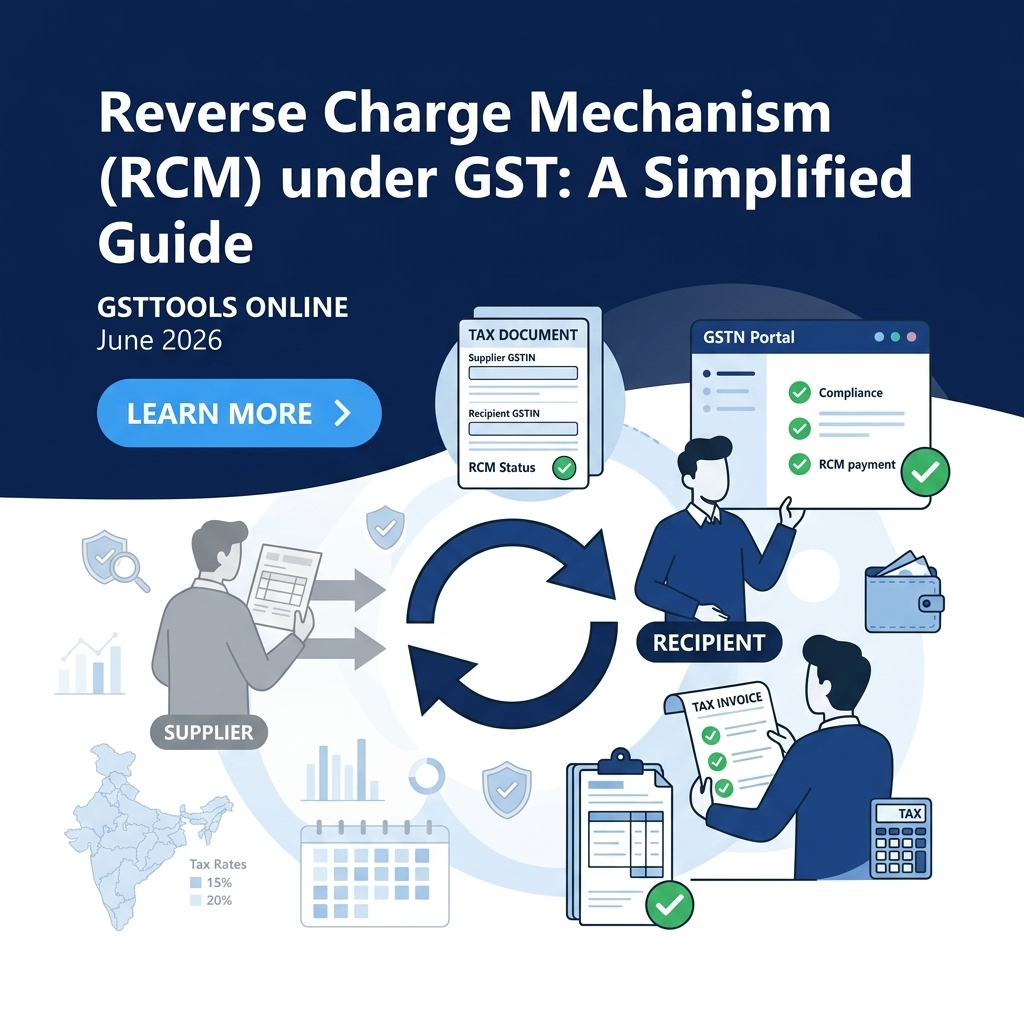
Normally, when you buy a product or service, the supplier charges you GST, collects it, and pays it to the government. This is called the Forward Charge.
However, under the Reverse Charge Mechanism (RCM), this entire process is flipped upside down. If you buy specific goods or services, the supplier will not charge you tax. Instead, you (the buyer) are legally obligated to calculate the tax, pay it directly to the government, and then claim the Input Tax Credit (ITC).
Failing to pay tax under RCM is a massive compliance risk. This guide breaks down exactly when RCM applicability kicks in and how you can manage it effortlessly in 2026.
What is Reverse Charge Under Section 9(3)?
Section 9(3) of the CGST Act explicitly lists the specific goods and services where the recipient is liable to pay the tax. The government uses this mechanism primarily in unorganized sectors where it is difficult to collect taxes directly from thousands of small suppliers (like truck drivers or freelance security guards).
Instead of chasing the unorganized suppliers, the tax department shifts the liability to the organized corporate buyers who are already registered under GST.
Key RCM Goods
The list of goods under RCM includes agricultural and specialized items mostly sold by unregistered farmers to registered businesses:
- Cashew nuts (not shelled/peeled)
- Bidi wrapper leaves (tendu)
- Tobacco leaves
- Raw cotton
- Silk yarn
Key RCM Services
Services form the bulk of RCM liabilities for everyday businesses. The most common include:
- RCM on Transport Services: Services provided by a Goods Transport Agency (GTA) who has not opted to pay GST under forward charge (5% without ITC, or 18% with ITC since 22 September 2025; earlier 12%). (Typically liable at 5% under RCM).
- Legal Services: Legal services supplied by an individual advocate (including a senior advocate) or firm of advocates to a business entity in the taxable territory, subject to the notified conditions.
- Sponsorship Services: The notified RCM entry covers a supplier other than a body corporate providing sponsorship to a body corporate or partnership firm in the taxable territory. Notification 07/2025-Central Tax (Rate) amended this entry; sponsorship supplied by a body corporate is excluded from that RCM entry.
- Director Services: Services supplied by a director of a company to the said company.
- Security Services: Security personnel provided by any person (other than a body corporate) to a registered person.
👉 Try it yourself: Don’t risk doing the RCM math wrong in your books. Use our RCM Calculator to accurately determine exactly how much tax you owe to the government on these purchases.
For legal-service conditions, see our legal services RCM guide. Sponsorship treatment was amended by Notification No. 07/2025-Central Tax (Rate), so check the supplier’s legal form before applying RCM.
How to Claim ITC on RCM
RCM is a cash-payment obligation. It may be a timing cost where the recipient is eligible for full ITC, but it can become a real cost where credit is unavailable, restricted or relates to exempt or non-business use.
Here is exactly how to claim itc on rcm:
- Pay in Cash: You cannot use your existing ITC balance to pay your RCM liability. When you file your GSTR-3B, you must pay the RCM amount using real cash via a challan.
- Assess ITC Separately: After paying the RCM tax, claim only the eligible amount in the appropriate return period, subject to Section 16 and any blocked-credit or apportionment rules. RCM payment does not guarantee a same-return or full ITC claim.
- Use the ITC: You can now use this newly claimed ITC to offset your normal output tax liabilities for your own sales.
Note: You can only claim ITC if the goods or services purchased are actually used for the furtherance of your business. If you pay RCM on a personal expense, the ITC is blocked.
Invoicing Under RCM
If you are the supplier providing an RCM service (for example, you are a lawyer providing services to a company), your invoice must clearly state that tax is payable on a reverse charge basis.
You do not add the 18% GST to your invoice total. You just bill for the base amount and add a bold declaration: “Tax payable under Reverse Charge Mechanism.”
If you are generating these types of bills, do not use a generic Word document. Use our GST Invoice Generator which has a specific toggle to properly format RCM-compliant invoices according to Rule 46.
Frequently Asked Questions
Does RCM apply if I buy from an unregistered dealer? Under Section 9(4), buying from an unregistered dealer used to trigger RCM on all items. However, this has been heavily restricted. Currently, Section 9(4) RCM only applies to specific specified persons (mostly builders/promoters buying cement or capital goods from unregistered suppliers). For regular small businesses, buying stationery from an unregistered shop does not trigger RCM.
What is the GST rate under RCM? The rate depends on the exact goods or service and the applicable rate notification. GTA, legal and security supplies can have different rates and conditions. Confirm the classification and current notification; a calculator only performs the arithmetic.
Is RCM applicable on import of services? Import of services can attract IGST under reverse charge when the statutory conditions are met. Check the service classification, place-of-supply and exemption rules, and assess ITC separately; do not assume every foreign software or marketing payment is taxable at 18%.
Can I adjust my RCM liability against my existing ITC? No. RCM liability must always be paid in cash through the electronic cash ledger.
Keep Your Books Clean
Review expense categories such as freight and legal fees against the notified RCM entries and transaction facts. Keep applicable supplier declarations, invoices, self-invoices where required, payment records and return reconciliations together.
Always review your monthly expenses, identify any RCM-liable invoices, and use the correct calculators to ensure your GSTR-3B is filed flawlessly.
(Read next: GST Composition Scheme 2026: Eligibility, Rates & How to Opt In)